.svg)
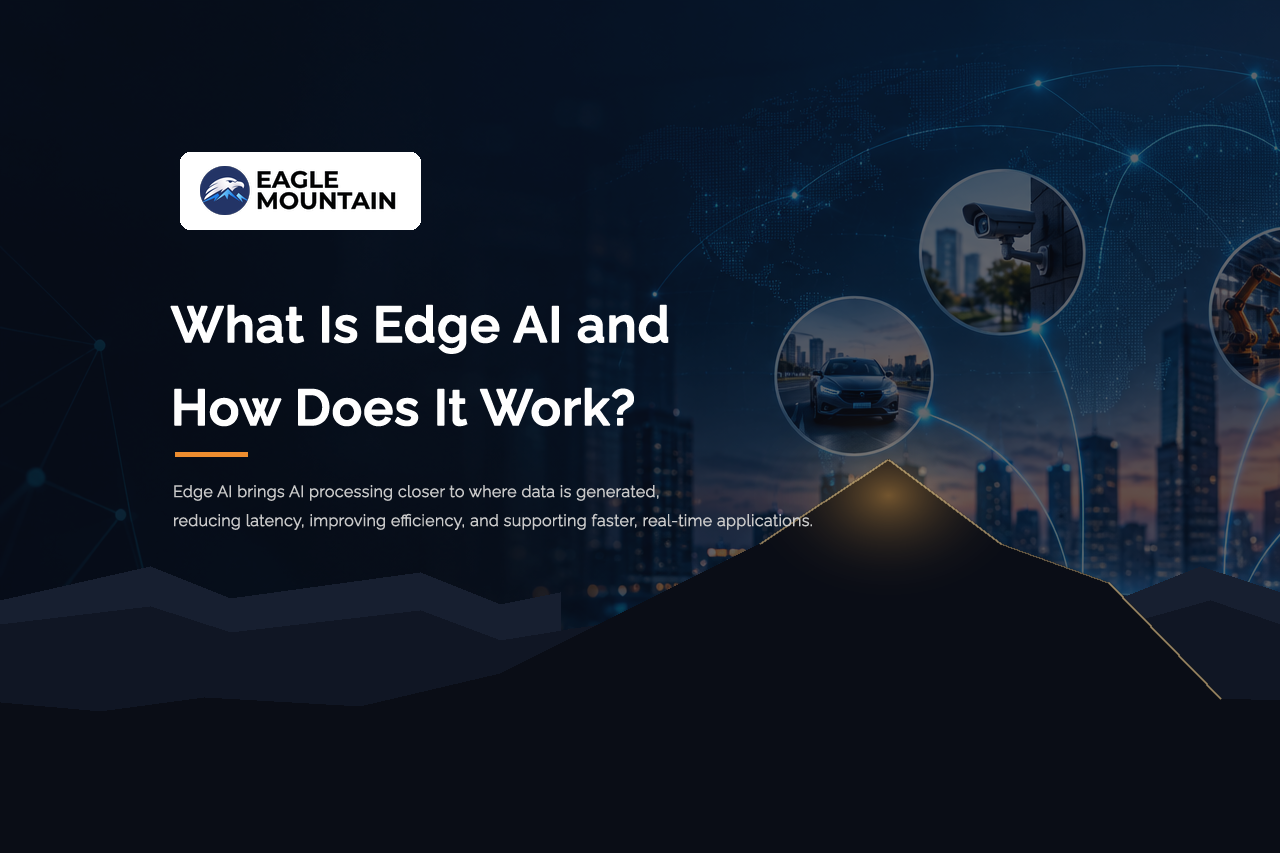
"Edge AI" gets used a lot right now, often loosely. Here's a straightforward breakdown of what it actually means, how it works, and why it's become one of the more important shifts in how AI infrastructure gets built.
What Is Edge AI
Edge AI is the practice of running AI processing — training, and especially inference — physically close to where data is generated or where results are needed, rather than routing everything back to a centralized cloud or data center. In simple terms, it means bringing computation and data storage closer to the location where they're needed, reducing the distance data has to travel and the delay that distance introduces. Edge AI applies that same principle specifically to AI workloads: instead of sending a request across the country to a central cluster and waiting for a response, the processing happens on infrastructure positioned much closer to the source.
How it actually works
In a traditional centralized model, a request — a sensor reading, a user query, an agent action — travels from its origin point, across a network, to a data center that might be hundreds or thousands of miles away. The AI model processes it there, and the result travels all the way back. Every leg of that trip adds latency.
Edge AI restructures this. Compute resources — GPUs, storage, networking — are distributed across multiple smaller, geographically closer locations instead of concentrated in one or two mega-facilities. When a request comes in, it's handled by the nearest capable node rather than the single central one. The result: dramatically shorter round-trip times, less strain on backbone network bandwidth, and processing that can continue even if connectivity to a central cloud is temporarily degraded.
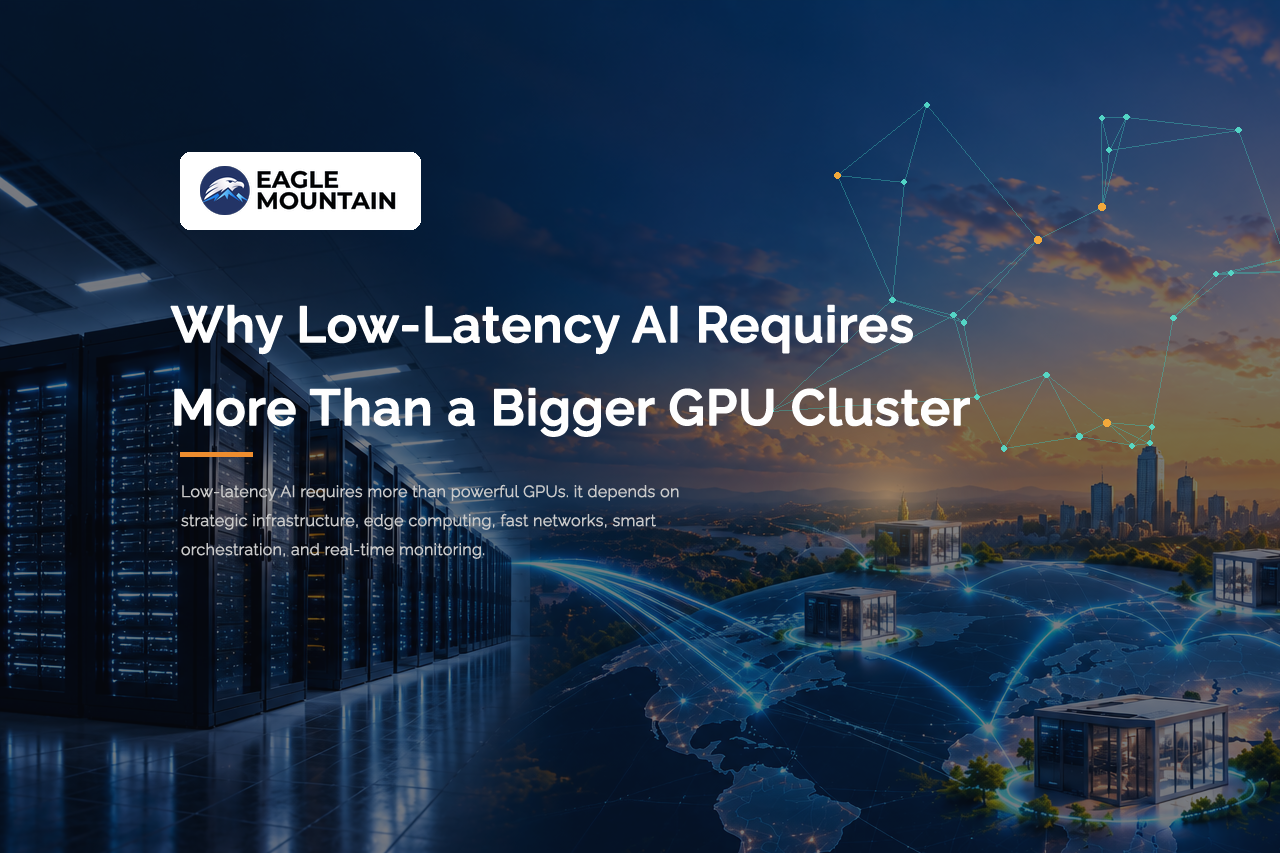
This isn't a fringe trend — the shift toward edge processing has been building for years, as enterprise data increasingly needs to be created and processed outside traditional centralized data centers to support real-time, distributed applications. AI workloads are one of the fastest-growing drivers of that shift, a point we dig into more in Why Low-Latency AI Requires More Than a Bigger GPU Cluster.
The core benefits of Edge AI
Lower latency. This is the headline benefit. Processing data closer to its source cuts the network round-trip that dominates response time in centralized architectures — critical for anything that needs to feel instant: conversational agents, autonomous systems, real-time recommendations.
Reduced bandwidth strain. Not every byte of raw data needs to travel back to a central cloud. Processing locally means only the relevant, refined output needs to move, easing pressure on network infrastructure.
Better reliability. Distributed infrastructure means no single facility is a single point of failure for your entire AI application.
Improved efficiency. Well-architected edge infrastructure can sustain higher hardware utilization, because workloads are matched to the nearest available resources instead of queuing for a single central pool.
What edge AI looks like in practice
Eagle Mountain Data is built specifically around this model. Rather than a small number of centralized mega-facilities, Eagle Mountain operates as a network of decentralized edge AI-factories, positioning GPU compute (BlinkAI), purpose-built storage (Store20), and low-latency interconnects (LitePulse) close to where AI workloads actually need to run. The measured impact of that design includes 0.68 ms ultra-low latency processing and up to 100x inference acceleration relative to centralized approaches, alongside 98% sustained hardware utilization.
This architecture is particularly suited to two fast-growing categories of AI work: real-time inference near demand, where production models need to respond instantly rather than after a round trip to a distant data center, and agentic AI, where autonomous agents making continuous decisions depend on consistently low latency to function reliably rather than lag behind the events they're responding to.
Why it matters going forward
As AI applications move from experimental to production-critical — powering live customer interactions, autonomous agents, and real-time decision systems — the tolerance for latency keeps shrinking. Centralized cloud architectures, built primarily for training workloads where a few extra seconds rarely matter, aren't naturally suited to this new demand. Edge AI is the architectural response: not a replacement for the cloud, but a necessary complement to it for the workloads where distance itself is the problem.
People Also Ask
Q: What is the difference between edge AI and cloud AI?
A: Cloud AI centralizes processing in a small number of large data centers, while edge AI distributes processing across multiple locations closer to where data is generated, reducing latency and network dependency.
Q: Does edge AI replace cloud computing?
A: No, it complements it. Cloud infrastructure remains well suited to large-scale training; edge AI is built for latency-sensitive inference and real-time workloads.
Q: What are real-world examples of edge AI?
A: Real-time inference for conversational agents, autonomous systems, live recommendation engines, and agentic AI applications that need to react instantly to changing input.
Q: Why is edge AI becoming more important now?
A: As AI shifts from experimental projects to production-critical systems, applications increasingly need real-time responsiveness that centralized cloud architectures weren't originally designed to deliver.
.png)